
The red spots on an infant’s skin do not constitute a diagnosis in themselves. They reflect different skin mechanisms depending on their appearance, location, and associated symptoms. Understanding these mechanisms allows for distinguishing a common reaction from a situation that warrants prompt medical advice.
Immature skin barrier: the mechanism that parents underestimate
An infant’s skin does not function like that of an adult. Its stratum corneum, the outermost layer of the epidermis, is thinner and allows more irritants to penetrate. This immaturity of the skin barrier explains why the same fabric, soap, or ambient temperature can cause visible reactions in the baby without affecting the parents.
Infant eczema is a prime example of this phenomenon. Dermatologists increasingly present it as a problem of a deficient skin barrier rather than a simple skin allergy. The skin loses too much water and allows too many irritants to enter, triggering chronic inflammation. The resulting red, dry, and rough patches often appear on the cheeks, the creases of the elbows, and the backs of the knees.
To better understand the causes of red spots in babies, one must start from this structural fragility rather than systematically searching for an allergen or virus.
Heat rash, eczema, or infection: recognizing the underlying mechanism
Not all red spots follow the same dermatological logic. Three main mechanisms cover the majority of situations encountered in infants.
Mechanical obstruction of sweat glands
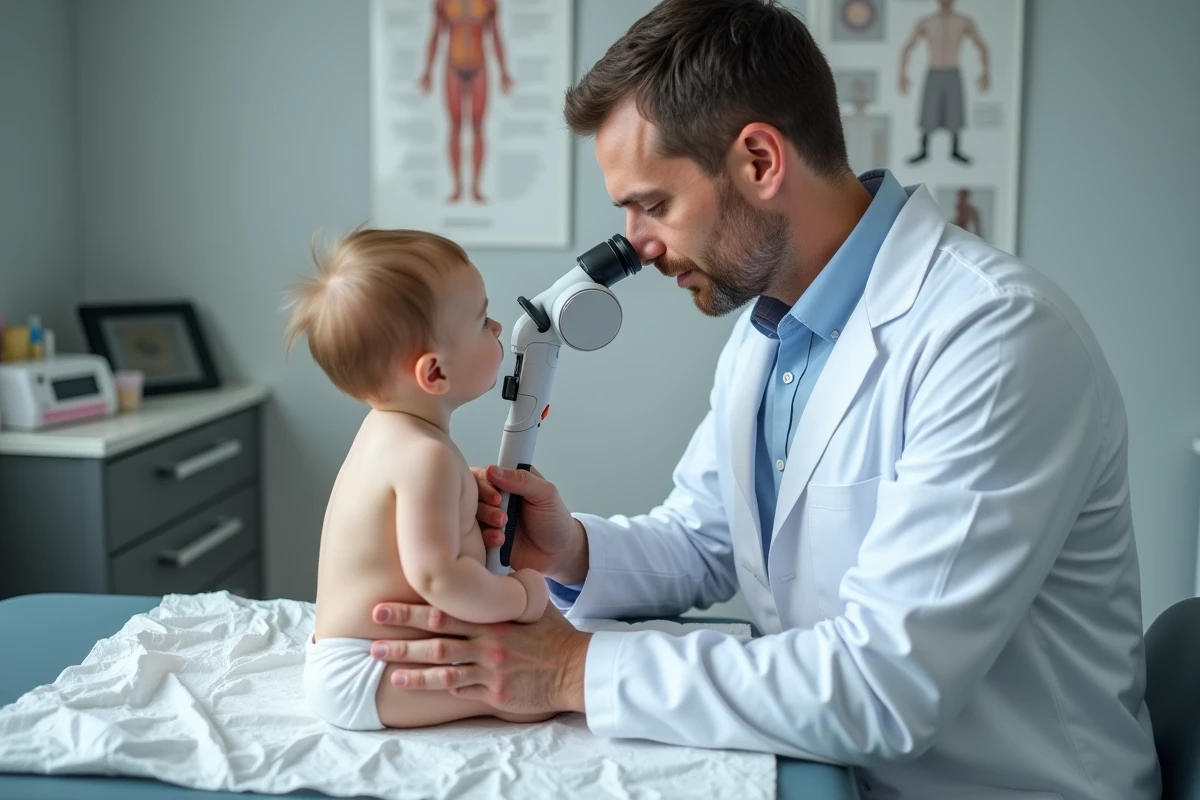
Heat rash (or miliaria) occurs when sweat is not properly expelled. Small red or pink spots form in the folds of the neck, under the arms, or on the chest. The mechanism is purely mechanical: sweat gets trapped under the skin and causes local irritation. These spots disappear within a few hours to a few days as soon as the temperature drops or clothing is lightened.
Chronic atopic inflammation
Atopic eczema is distinguished from heat rash by its persistence and itching. The patches are dry, sometimes weeping during flare-ups, and recur in cycles. The baby rubs their face or limbs and sleeps poorly. Management focuses on restoring the skin barrier with an appropriate emollient, not on multiplying products.
Rashes related to a viral infection
Some childhood illnesses such as roseola, chickenpox, or scarlet fever cause characteristic rashes, often accompanied by fever. Roseola typically presents with high fever for a few days, followed by a rash of small pink spots on the trunk. Chickenpox produces vesicles filled with clear fluid, recognizable by their “dew drop” appearance.
The combination of fever and rash always alters the level of vigilance required, even if the cause turns out to be benign in most cases.
Petechiae in infants: the alert signal to know
Petechiae are tiny red or purplish spots that do not fade when pressed with a finger (or through a clear glass). This simple test, called diascopy, distinguishes them from most other red spots.
In a generally healthy infant, without fever or behavioral changes, petechiae are often benign. They can appear after a coughing fit, prolonged crying, or repeated vomiting, due to simple capillary fragility.
The situation changes dramatically if the petechiae are accompanied by fever, lethargy, marked paleness, or respiratory distress. These associated signs constitute a medical emergency and justify immediate consultation, without delay.
Infant skin care: actions that reduce flare-ups
The management of benign red spots relies more on reducing irritation than on applying multiple products. Dermatological recommendations converge on a precise routine:
- A short bath in lukewarm water (not hot), which limits dehydration of the fragile epidermis of the infant
- Drying by patting with a soft towel, without rubbing the skin, to avoid any mechanical micro-aggression
- Applying an emollient immediately after the bath, on slightly damp skin, to trap moisture in the stratum corneum
- Cotton, loose-fitting clothing, and a moderate ambient temperature to limit excessive sweating
These simple actions are sufficient to space out eczema or heat rash flare-ups in the majority of infants. Multiplying care products (oils, scented creams, lotions) often has the opposite effect by overwhelming already reactive skin.
When to consult a doctor for red spots in babies
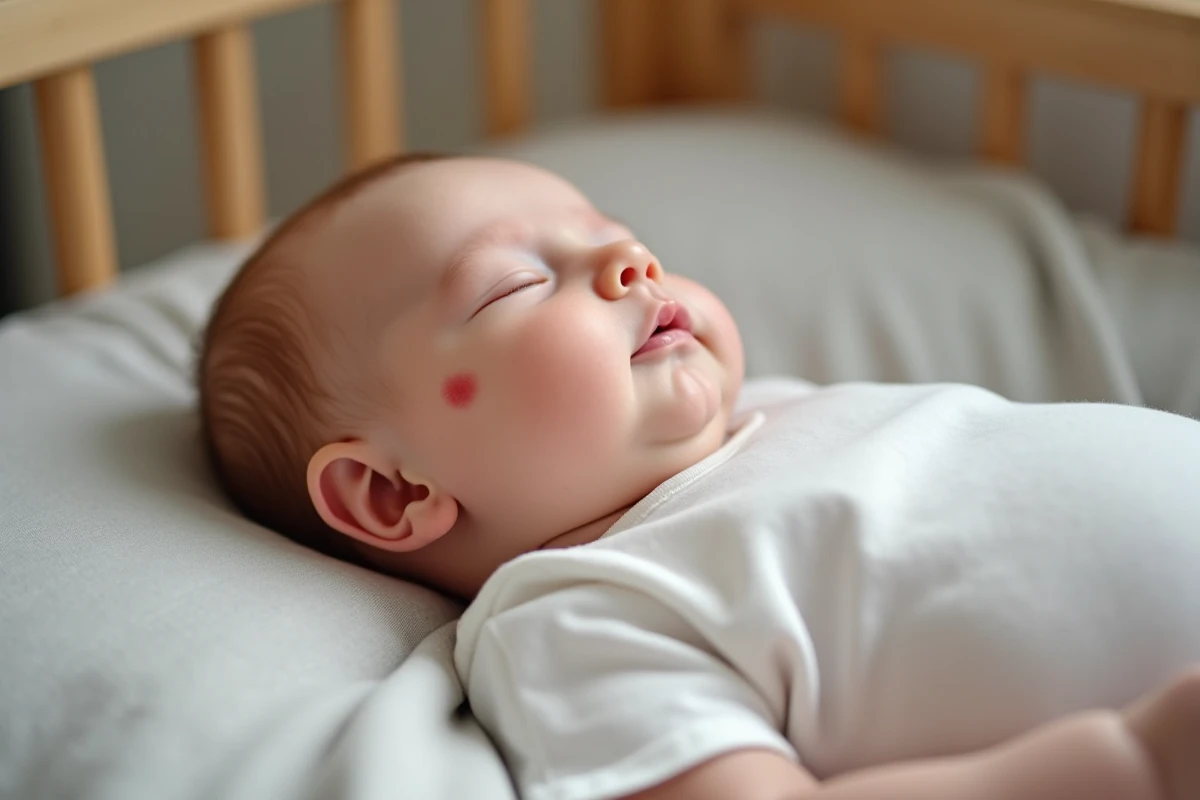
The severity of a rash depends as much on the general context as on the appearance of the spots. The same isolated red spot does not have the same significance in a lively, smiling baby as it does in a feverish, apathetic infant.
A quick consultation is necessary in the following situations:
- Petechiae associated with fever, unusual paleness, or difficulty breathing
- Lesions that bleed, ooze, or become covered with a yellowish crust (possible signs of superinfection)
- A sudden rash accompanied by intense itching and swelling (acute urticaria)
- Spots that persist beyond a few days without improvement despite basic care
Associated signs matter more than the appearance of the spot: a change in behavior, refusal to eat, or persistent fever always justifies a call to the doctor, regardless of the appearance of the skin.
Most infant rashes resolve spontaneously. The most useful reflex remains to observe the baby as a whole – their energy, appetite, temperature – rather than focusing solely on the spot itself.