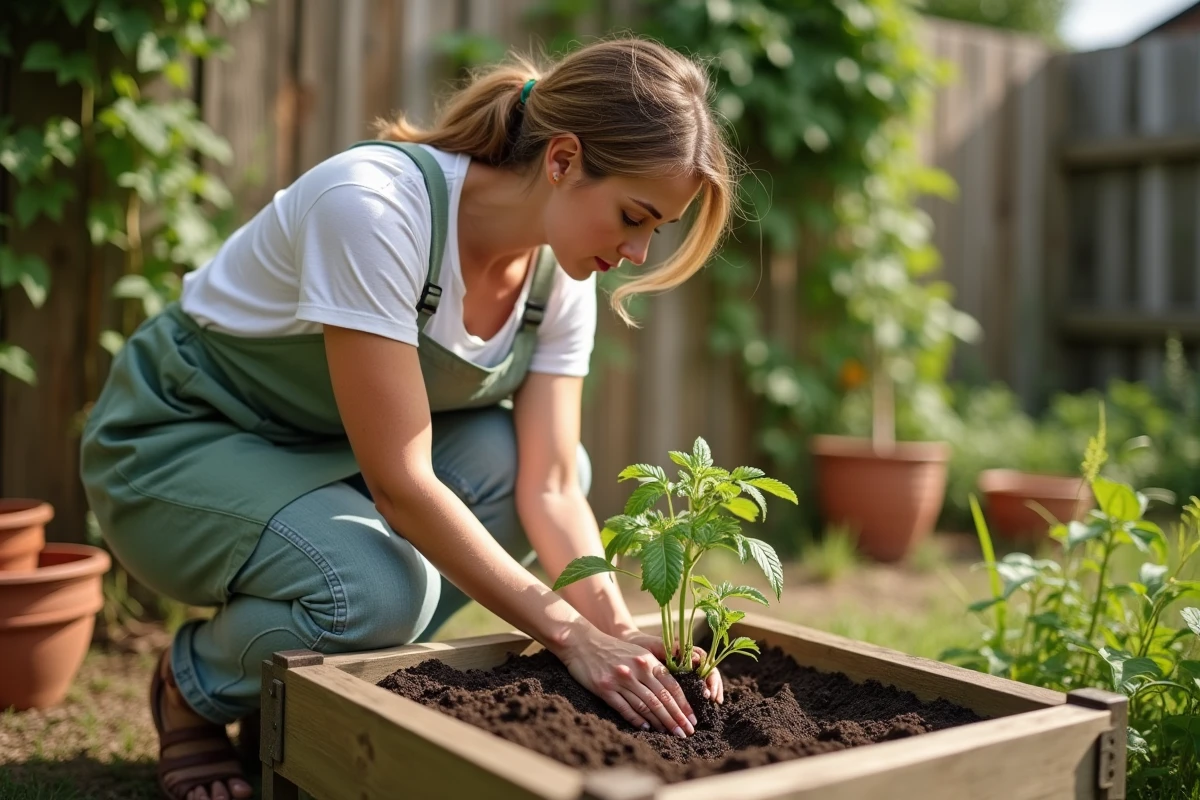
A late frost in April that scorches tomato plants transplanted the day before, radish seedlings that sprout and then stagnate in still cold soil: these situations strike thousands of beginner gardeners every spring. Successfully growing your first garden does not rely on a list of generic good practices, but on the ability to read your land, observe local signals, and adjust your plant choices accordingly.
Late frosts and microclimates: adapting your vegetable garden to the real climate of 2025
Traditional gardening guides are based on fixed climate zones. In practice, late frosts have become more frequent in spring, even in regions that were usually spared. Marked cold spells are observed until the end of April in areas where, ten years ago, transplanting was done risk-free as early as mid-March.
The most reliable strategy is to shift planting by two to three weeks compared to usual calendars, especially for cold-sensitive vegetables (tomatoes, zucchinis, peppers). Better a late transplant than a scorched plant.
To identify your microclimate, observe your plot over several cold mornings. Low areas accumulate cold air, while a south-facing wall retains heat at night. A winter cover placed in the evening and removed in the morning effectively protects young plants during a forecasted frost. Resources like jardiner-facile.com allow you to cross-reference these observations with seasonally adapted advice.
Choosing your first vegetable plants according to soil type
Before filling a basket with seeds, take a handful of soil. If it sticks into a ball and remains compact, the soil is clayey. If it crumbles between your fingers, it is sandy. This simple test changes everything: vegetables do not react the same way depending on soil texture.
Clay soil: focus on leafy vegetables
Heavy soil retains water and warms up slowly. Lettuce, spinach, and Swiss chard thrive in it. In contrast, carrots and radishes struggle to penetrate and become deformed. To improve the structure, incorporate well-decomposed compost on the surface without turning the soil deeply.
Sandy soil: favor root vegetables
Radishes, carrots, and potatoes thrive in light soil because their roots develop without obstruction. The opposite problem arises: water drains too quickly. A thick mulch (straw, dried grass clippings) limits evaporation and maintains consistent moisture around the plants.
In both cases, adding potting soil during the planting of the first seedlings compensates for imbalances while the soil naturally enriches itself.
Sowing or plants: the right choice for a successful first season
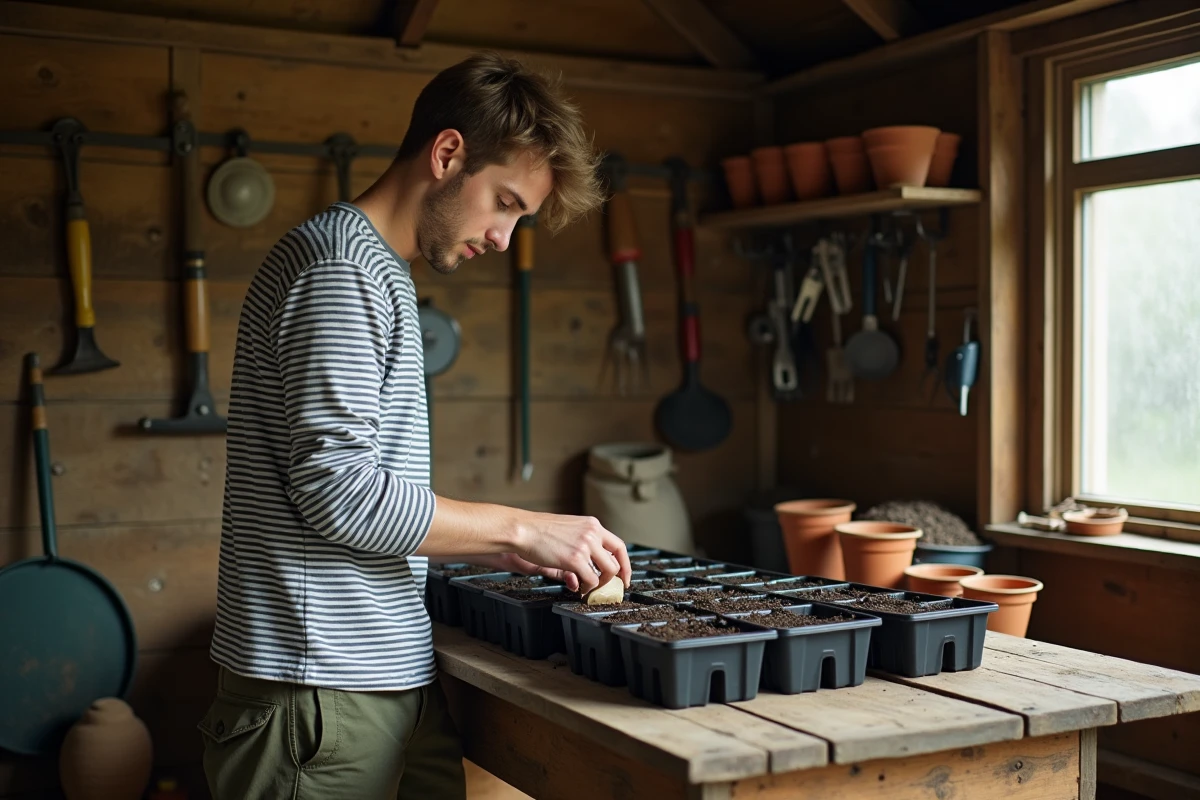
Sowing your own seeds is cheaper but requires time, equipment (pots, seedling soil, sufficient light), and a certain regularity in watering. For a first vegetable garden, buying already developed plants reduces the risk of failure for demanding crops like tomatoes or peppers.
Direct sowing in the ground remains the best option for vegetables that do not like to be moved:
- Radishes, sown every two weeks from March to September, produce in less than a month and allow you to understand the complete life cycle of a plant
- Green beans, sown after the last frosts, germinate in a few days and tolerate average soils
- Herbs like basil and parsley can be sown directly in pots or along the edge of the vegetable garden, provided the substrate is kept moist until germination
For the first year, combine: purchased plants for fragile species, direct sowing for fast-growing crops. This mixed approach yields visible results quickly, which helps maintain motivation.
Watering the beginner vegetable garden: frequency and common mistakes
Watering is the primary source of failure among novice gardeners. Too much water kills just as much as too little. Watering thoroughly but less frequently forces roots to grow deeper, making plants more resistant to drought.
Specifically, water at the base of the plants in the morning or late in the day, never in full sun on the foliage. A mulched soil retains moisture for several days, which spaces out watering. To check if the soil needs water, insert a finger a few centimeters deep: if it feels cool underneath, wait.
Opinions vary on the ideal frequency because it entirely depends on soil texture and exposure. A vegetable garden in full sun on sandy soil will require almost daily watering in summer, while a bed in partial shade on clay soil can go four to five days.
Growing vegetables without a garden: container and raised bed gardening
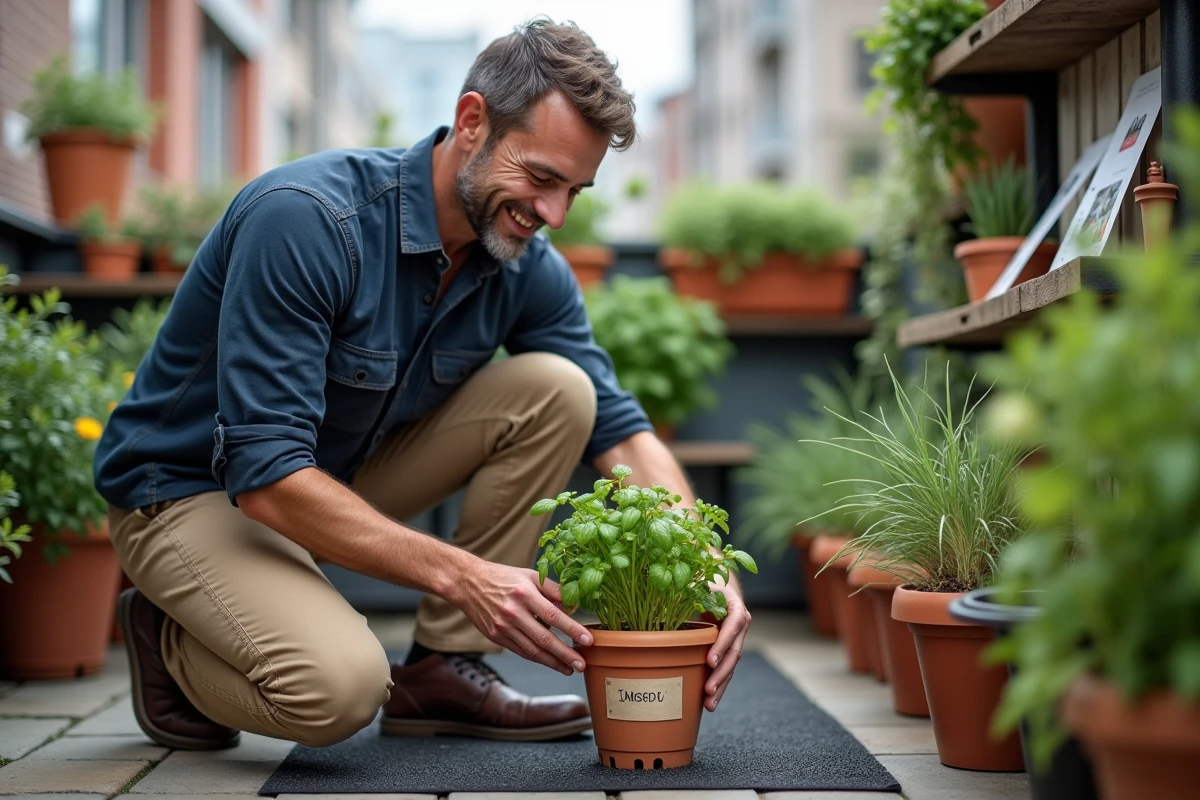
A balcony or terrace is enough to grow herbs, cherry tomatoes, strawberries, or salads. The main constraint is not space, but the volume of potting soil per plant: a pot that is too small limits root development and dries out in a few hours.
- Cherry tomatoes need a container of at least twenty liters, filled with a soil-compost mix, with a sturdy stake
- Herbs (thyme, chives, mint) can manage with smaller pots, provided there is proper drainage at the bottom
- Salads in elongated planters produce leaves that can be continuously harvested if the outer leaves are picked without uprooting the plant
Each pot must have drainage holes at the bottom to prevent water stagnation, the primary cause of root rot in container gardening. Place a layer of clay balls or gravel before the potting soil to facilitate drainage.
Container gardening is less forgiving of watering lapses than a garden bed because the volume of available soil is limited. In return, you have better control over substrate quality and avoid issues related to polluted or overly compacted soils. For a first attempt, three or four well-managed pots are better than a dozen containers that are only half cared for.