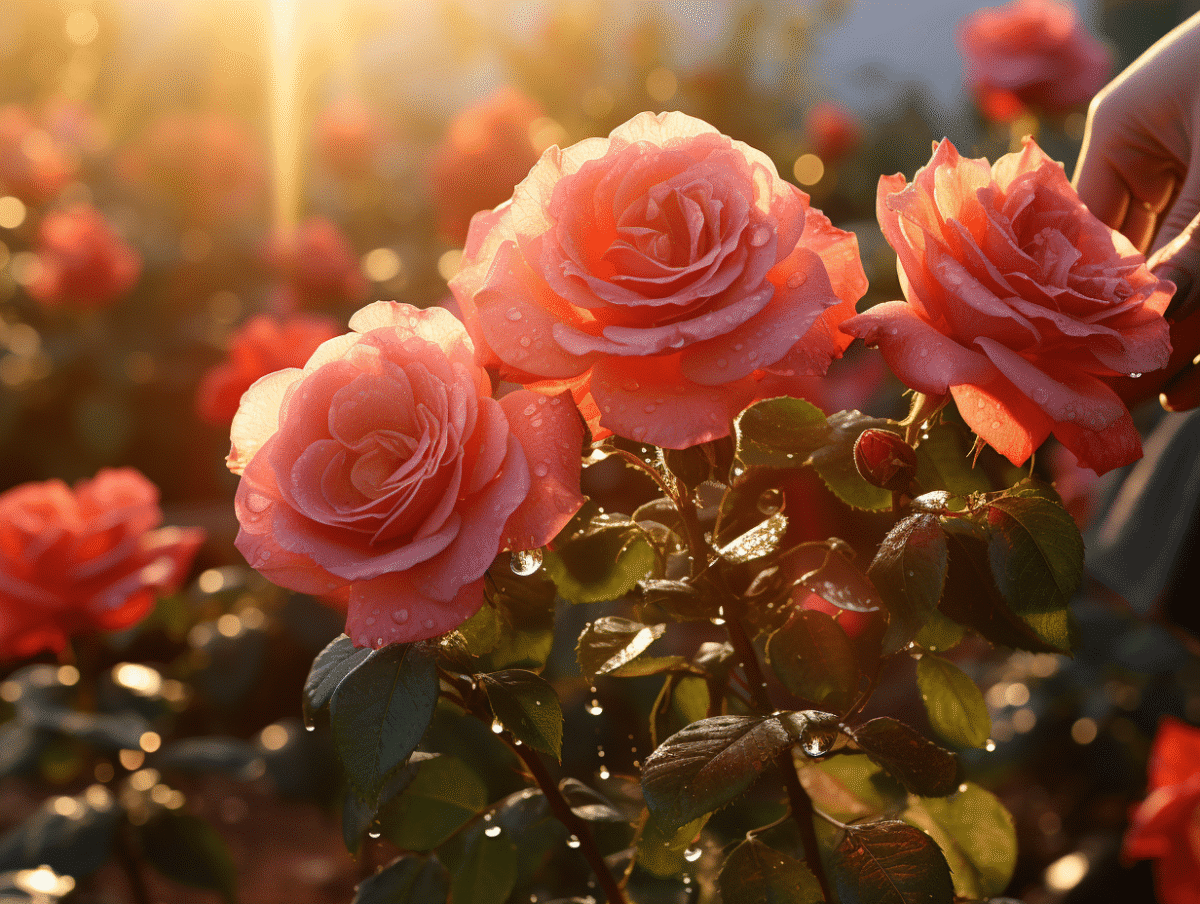
Cultivating roses is an art that combines patience and delicacy, transforming gardens into scenes of enchanting beauty. These flowers, symbols of love and passion, require special attention to thrive. From selecting disease-resistant varieties to preparing the ideal soil, every step is crucial. Regular maintenance, including proper pruning and pest control, ensures a generous and lasting bloom. A comprehensive guide on planting and caring for roses is essential for gardeners aspiring to create flower-filled spaces where these queens of the garden can reign in splendor.
The essential steps for planting roses
The planting of roses is a thoughtful process that begins with the choice of location. A rose requires exposure to sunlight for abundant and healthy blooming. Choose a spot bathed in light where the Atmosphere of the Garden can be enhanced by the brilliance and fragrance of the roses. Ensure that the soil is sufficiently spaced from other plants to avoid competition for nutrients and water.
For the roots to develop unhindered, the planting hole must be of adequate depth. Dig a significant space that can accommodate the main root and its extensions, taking care not to constrain them. Roses, with their robust roots, will thus anchor themselves firmly in the soil, laying the groundwork for vigorous growth.
The quality of the soil is a significant factor in the success of planting. Roses thrive in rich, well-drained soil, where water does not stagnate. Enrich the soil with compost or well-decomposed manure to provide a nourishing and welcoming environment, thus promoting better recovery of the rose after planting.
After positioning the rose in the hole, it is necessary to fill it with the enriched soil mix, ensuring that the grafting point is slightly above the soil level to avoid the risk of rot. A generous watering is essential to compact the soil and expel air around the roots, ensuring optimal contact between the soil and the rose’s root system. Be sure to maintain soil moisture without excess, especially during the first weeks following planting, to facilitate rooting and initial growth of the plant.

Practical tips for maintenance and disease prevention
Mulching is a favored technique for maintaining soil moisture while providing protection against unwanted weeds. Use organic materials such as bark or compost that, as they decompose, will also enrich the soil. Mulching helps create a favorable microclimate, reducing the need for frequent watering interventions.
Watering, on the other hand, should be measured and adapted to the needs of the roses. Too much water encourages the appearance of fungal diseases, while a lack of water will stress the plants, decreasing their resilience and blooming. Deep and spaced watering is recommended to encourage the development of deep and robust roots. Prefer the early hours of the morning, thus avoiding rapid evaporation and the proliferation of diseases due to nighttime moisture.
Weeding complements this approach by aerating the soil and facilitating water penetration. This practice, carried out regularly, also removes weeds that compete with roses for soil resources. Well-worked soil ensures better overall health of the plant and a more generous bloom.
Disease prevention such as chlorosis requires special attention to soil balance. Regular application of chelated iron can correct this deficiency, a symptom of overly calcareous soil or poor nutrient assimilation. Be sure to follow specific treatment recommendations for each rose variety, as care and prevention requirements can vary greatly depending on the species.