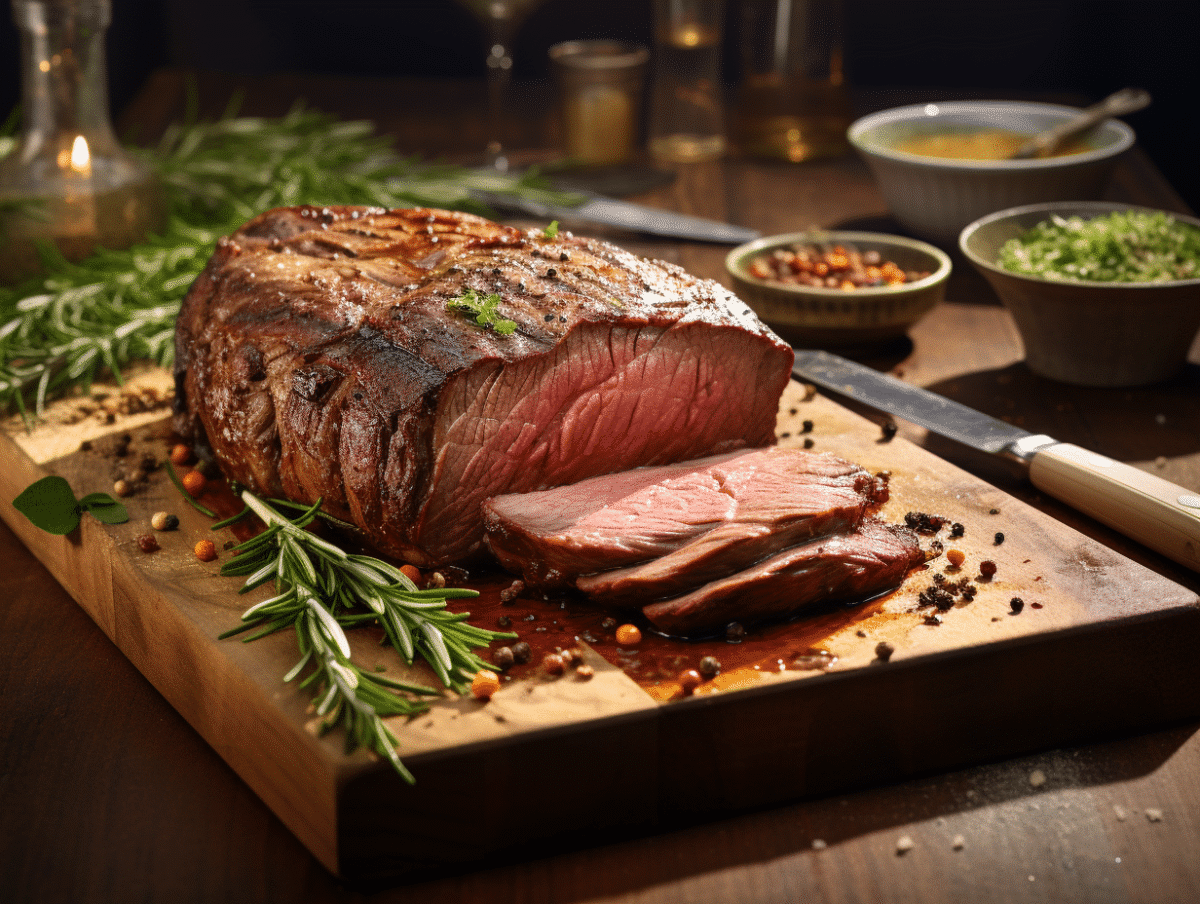
In the culinary world, the success of a roast beef often hinges on mastering its cooking, a challenge taken on by many food enthusiasts. Precision is key, especially when it comes to using a convection oven, a modern and efficient tool that promises even cooking. However, with the different qualities of meats, their sizes, and individual preferences for rare, medium, or well-done meat, questions abound. Fortunately, tips and recommendations exist so that everyone can serve a perfectly cooked roast beef.
The advantages of cooking roast beef in a convection oven
The convection oven has established itself as a valuable ally in preparing roast beef. This appliance, praised for its ability to distribute heat evenly, ensures a uniform cooking of the piece of meat, whether it is a sirloin, a flank steak, a tenderloin, a baron’s tail, or a rump heart. Unlike traditional methods, the convection oven avoids overcooked spots or, conversely, insufficiently heated areas, thus ensuring a juicy and flavorful meat in all circumstances.
The benefits do not stop there. The cooking temperature can be finely controlled, which is essential to achieve the desired doneness: 60° C for rare meat, 68° C for medium, and 75° C for well-done meat. With devices like a kitchen thermometer, cooks can accurately measure the internal temperature of the meat, thus avoiding any risky approximations.
Follow our tips for successfully cooking your roast beef and make your convection oven a trusted partner. For example, plan for 30 minutes of cooking at 180° C for smaller pieces, adjusting based on the weight and shape of your roast. Mastering these parameters will allow you to achieve the perfection sought by gourmets and offer your guests a memorable dish, a symbol of both precise and sensitive cooking.
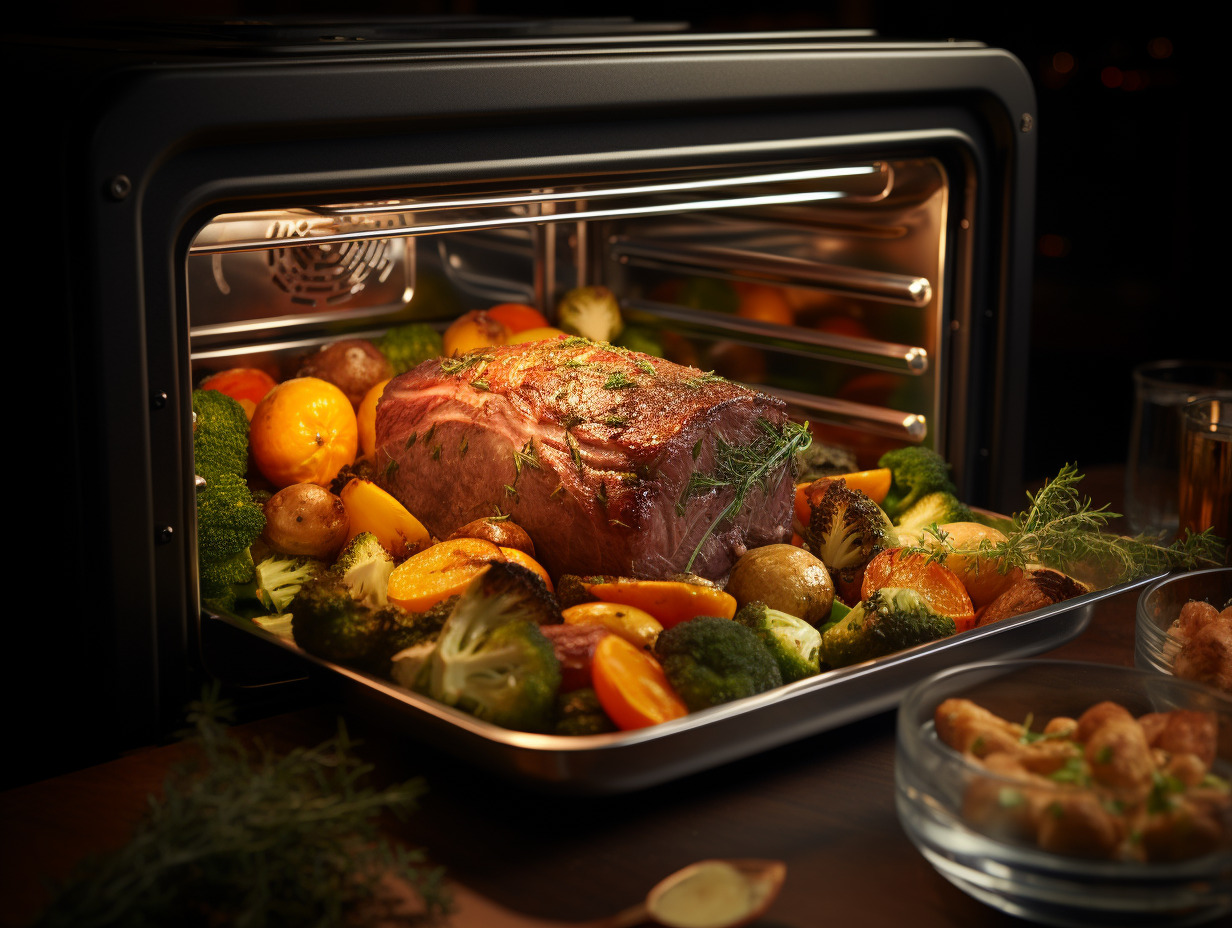
Techniques and tips for perfect cooking of your roast beef in a convection oven
Preparing a roast beef in a convection oven begins well before inserting the piece of meat into the appliance. Butcher’s tip: select a roast with a good fat covering. This will melt during cooking, basting the meat and contributing to its tenderness. Before cooking, remember to tie the roast to maintain its shape and ensure even cooking.
Flavoring plays a key role in creating a tasty roast. Feel free to enhance your piece with rosemary or sage, herbs that will wonderfully complement the natural flavor of the beef. A prior marinade, incorporating aromatic herbs and spices, can also infuse the meat with subtle flavor nuances.
Mastering the internal temperature is fundamental. Use a kitchen thermometer to ensure that the meat reaches the desired temperature: 60° C for rare meat, 68° C for medium, 75° C for well-done. This check eliminates the uncertainty of cooking and allows you to serve a roast to the expected perfection. Low-temperature cooking is an option for those looking to preserve the tenderness and juiciness of the beef.
Roast beef is traditionally accompanied by potatoes and sauce. For a coherent and harmonious dish, roast the potatoes in the same oven, taking advantage of the residual heat. As for the sauce, deglazing the roasting pan with a bit of white wine can provide an aromatic base for a creamy sauce, thus complementing the richness of your dish.