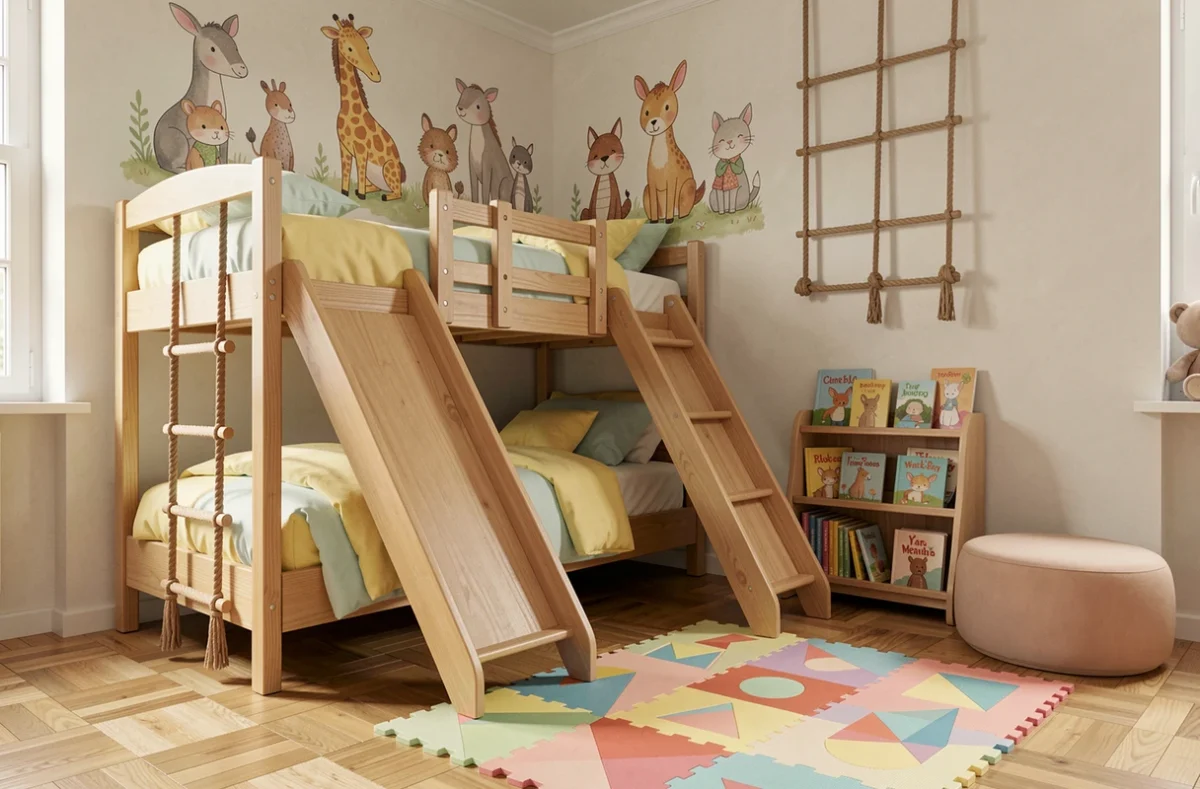
Designing a child’s room involves balancing two rapidly evolving needs: the need to play and the necessity for a safe space. Furniture suitable for a three-year-old is no longer appropriate for a seven-year-old, and the temptation to replace everything at each stage weighs on both the budget and the organization of the room. Thinking about the layout in terms of durability and adaptability helps limit these cycles of renewal.
Adaptable furniture: anticipating growth without replacing everything
The first instinct is to distinguish between short-lived furniture (changing table, crib) and those that can accompany the child for several years. An extendable convertible bed transitions from a length suitable for a toddler to a standard size for a pre-teen, with a simple extension kit. The desk follows the same logic: a height-adjustable tabletop avoids the need to buy two or three successive desks between preschool and middle school.
Storage deserves the same attention. Modular shelves with addable or removable bins adjust to the volume of toys, then books and school supplies. The idea is not to furnish the entire room from the start, but to plan for free spaces that the child will fill as they grow.
On kids-paradise.fr, you can find a selection of furniture designed to follow these different stages, from cabin beds to child-height storage solutions.
Furniture and fixture safety: concrete checkpoints
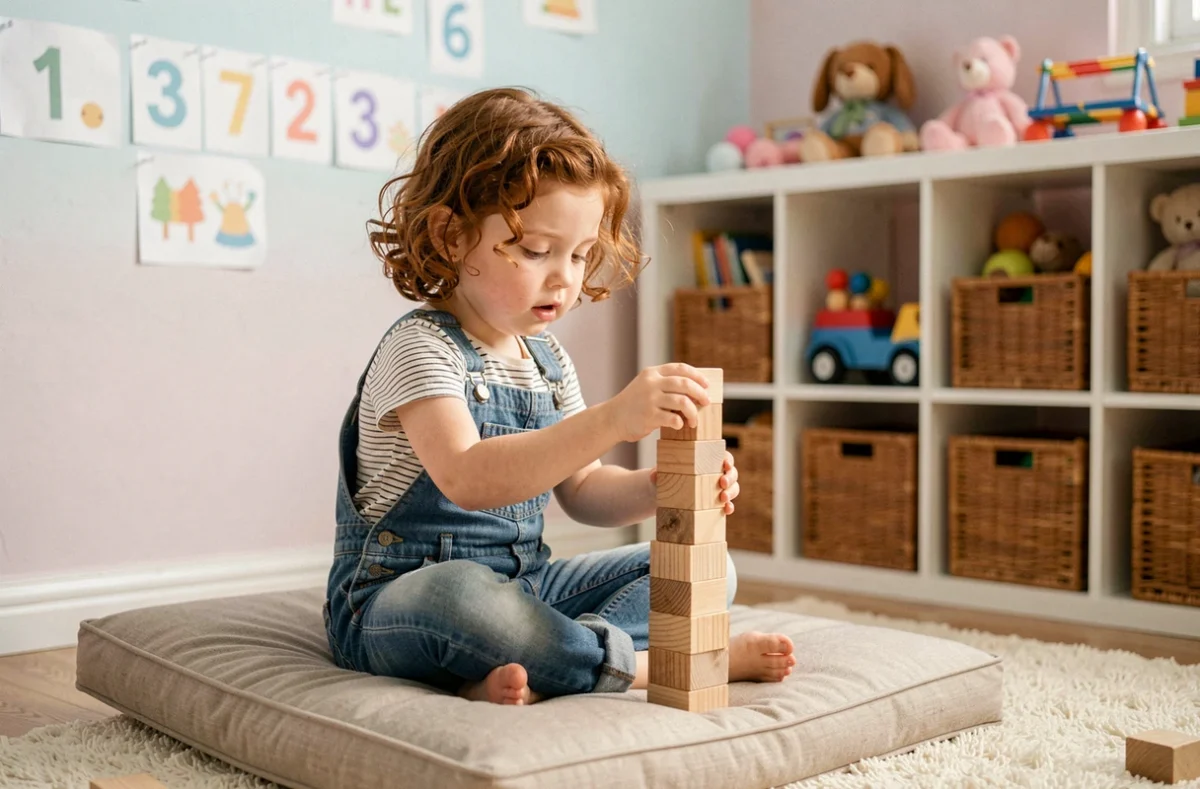
Competitors approach safety by broad categories of risks. In practice, three simple checks reduce the majority of domestic accidents in a child’s room.
- Wall anchoring of tall furniture: a dresser or bookshelf not secured to the wall can tip over if a child tries to climb it. Anchoring kits (straps or metal brackets) can be installed in minutes and remain invisible behind the furniture.
- Edges and corners: silicone corner protectors absorb impacts on low tables and shelves. Opting for wooden furniture with rounded edges already limits the problem at the source.
- Drawers and closet doors: a drawer lock prevents finger pinching. For cabinets with hinged doors, a soft-close damper slows the door and eliminates slamming.
The stability of the furniture takes precedence over its aesthetics. A lightweight particle board storage unit tips over more easily than a solid wood or thick MDF piece. Checking the weight and width of the base before purchase avoids many scares.
Play and rest areas: separating uses within the same space
In a modestly sized room, everything quickly mixes: toys scattered at the foot of the bed, books piled on the desk, stuffed animals on the chair. Visually separating the areas, even without a partition, helps the child transition from one activity to another and facilitates tidying up.
Defining without partitioning
A floor rug is enough to mark a play area. Placing a thick, colorful rug in one corner of the room signals to the child that this space is dedicated to free play. The rest of the floor, kept clear, leads to the bed and the desk. This separation works from the age of two and remains relevant long after: the rug will later accommodate building or board games.
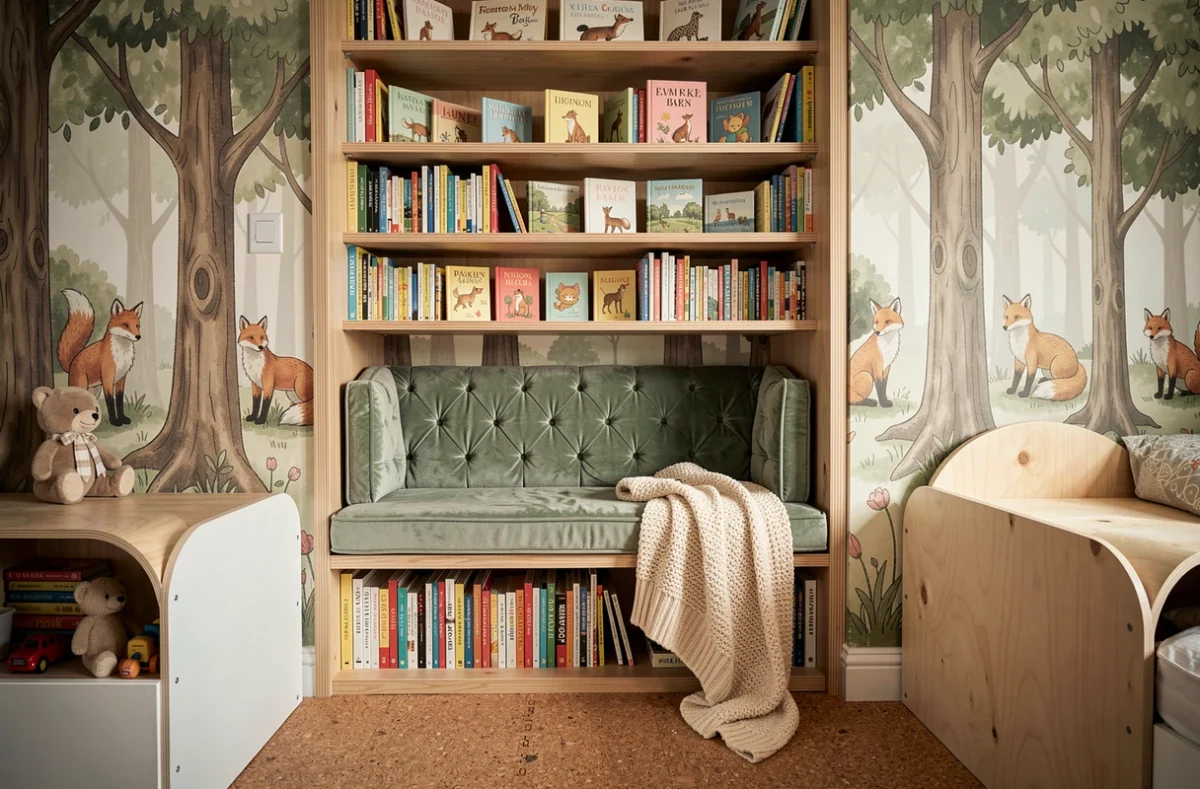
A curtain hung on a rod fixed between two walls creates a semi-enclosed reading nook without any construction. The child can settle in with a few floor cushions and a small shelf of accessible books. This type of setup is inexpensive and can be taken down in five minutes when the use changes.
Adapting the layout as children grow
By the age of three or four, the play area occupies most of the room. The bed is often low to the ground to limit falls. At six or seven, a mid-height bed frees up floor space for a small desk or creative corner. Each change in configuration reuses existing furniture by moving it rather than replacing it.
A common mistake is to overly theme the room (cartoon characters, very bright single colors). A four-year-old child passionate about dinosaurs will have changed interests two years later. A neutral wall background (off-white, beige, light gray) combined with removable decorative elements (posters, repositionable stickers, garlands) allows for refreshing the atmosphere without repainting.
Accessible storage: child autonomy and lasting order
Storage that the child cannot reach alone is storage they will not use. The basic principle is simple: everything used daily (toys, books, everyday clothes) should be at their height, arms extended.
Open stackable bins fulfill this role better than chests with lids, where everything ends up in a jumble at the bottom. Three or four labeled bins (with a picture for children who cannot read yet) are enough to categorize toys. As the child grows, the same bins can hold school supplies or sports gear.
For clothes, a low wardrobe (rod fixed about one meter off the ground) allows a four-year-old to choose their outfits. The rod is raised every two or three years. This approach promotes autonomy without requiring additional furniture: a simple adjustable rod in an existing closet is sufficient.
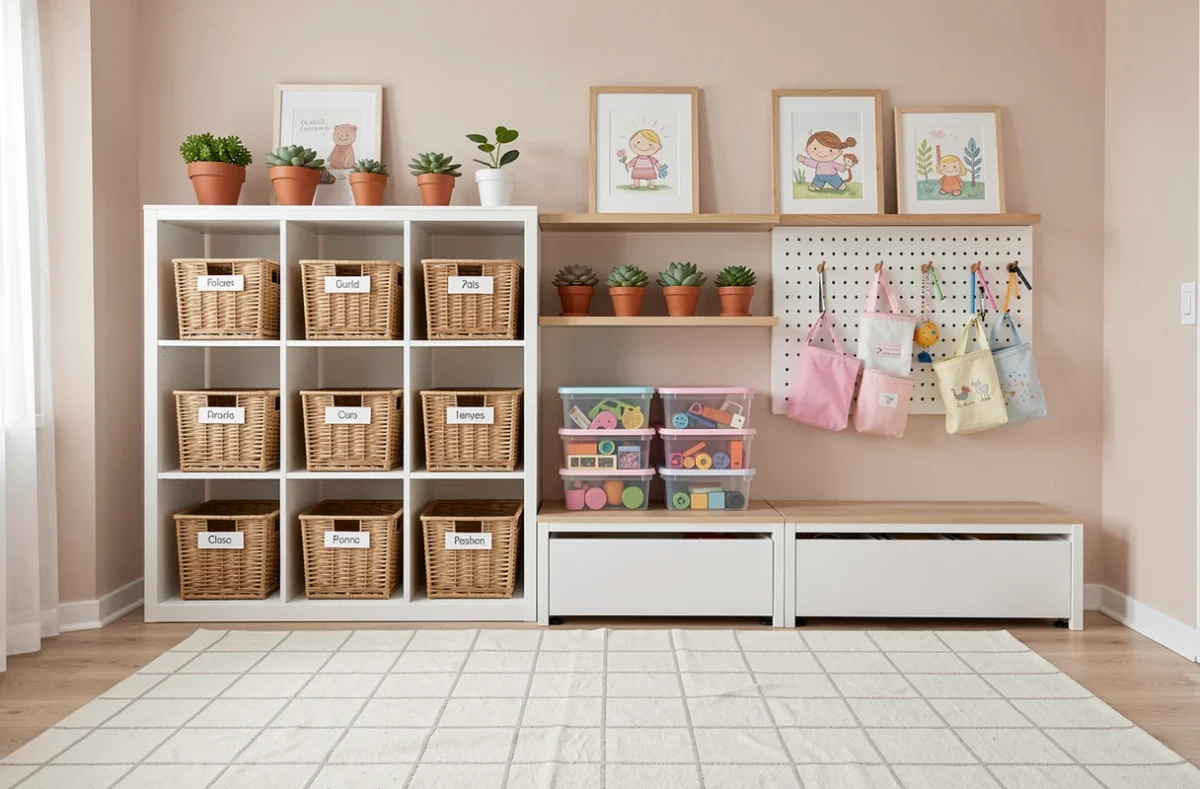
Designing a child’s room should be seen as a flexible framework rather than a fixed decor. Simple, well-secured furniture, with adjustable height and layout, covers most needs between the ages of two and ten. Playful elements, however, remain removable: rugs, cushions, posters, colored bins. It is this light decorative layer, easy to renew, that gives the room its character without requiring renovations for each birthday.