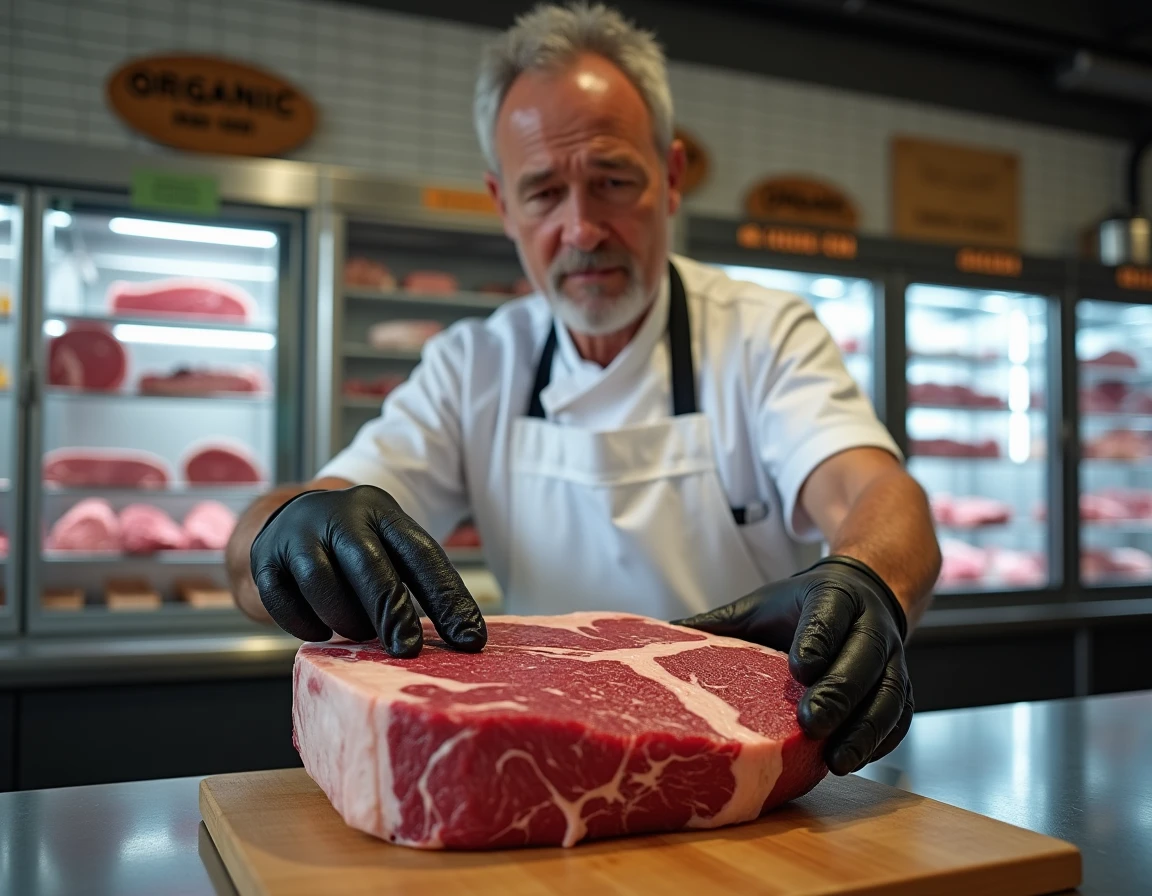
The USDA Choice grade classifies American beef based on its marbling and tenderness. It says nothing about the farming methods, animal feed, or the use of antibiotics. The same cut stamped USDA Choice can come from a conventional feedlot or a certified organic farm. Only the complete label allows for differentiation.
Marbling and Organic Farming: Two Independent Frameworks
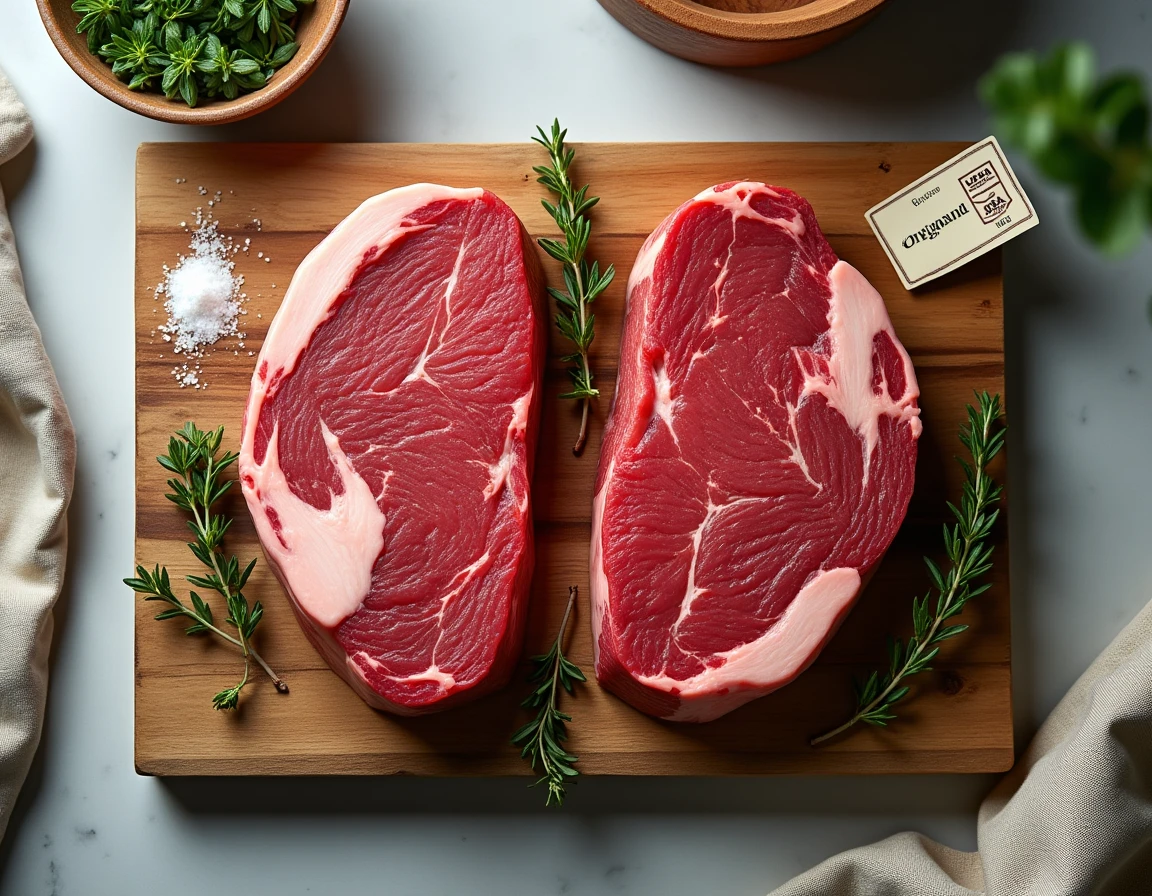
The USDA grading system is based on sensory criteria. Inspectors evaluate the degree of intramuscular marbling, the maturity of the carcass, and the color of the fat. A grain-fed beef and a beef raised according to the National Organic Program guidelines can receive the same Choice grade if their marbling reaches the required threshold.
The Prime, Choice, Select grading system operates in parallel with the USDA Organic label, without interaction between the two. Marbling does not provide information about farming practices, and organic certification does not guarantee a specific level of marbling.
For those who wish to delve deeper into the distinction between quality grade and production method, it is possible to learn more about USDA Choice with Le Bio du Coin before deciphering the labels in the aisle.
USDA Organic on Choice Beef: What the Guidelines Require
When a piece of beef simultaneously bears the USDA Choice label and the green USDA Organic logo, it means it has met two distinct procedures. The Choice grade validates sensory quality. The Organic certification, administered by the National Organic Program (NOP), validates production conditions.
The NOP imposes several constraints on farmers who want to use the organic label:
- The livestock feed must be certified organic and exclude any genetically modified organisms.
- Animals must have access to the outdoors during the grazing season.
- The use of antibiotics and growth hormones is heavily regulated, with much stricter restrictions than in conventional farming.
A conventional beef classified as Choice may have received preventive antibiotics, growth hormones, and a diet based on GMO corn without affecting its grade. The grade does not filter any health or environmental practices.
Residues and Contaminants: What Comparative Analyses Show
Recent studies mainly highlight a difference in pesticide residues and certain contaminants between organic and conventional meat. Meat from organic farming shows lower levels of residues related to pesticides used in forage crops.
However, in terms of tenderness and taste, no systematic difference is established between organic and conventional at the same grade. An organic USDA Choice and a conventional USDA Choice can offer a very similar mouthfeel. The difference lies in what cannot be seen or tasted: the burden of chemical residues and the environmental footprint of the supply chain.
This finding complicates the consumer’s task in-store. Touch, color, and visible marbling are not reliable indicators for distinguishing organic from conventional.
Strengthening Organic Enforcement: Enhanced Traceability Since 2022
The USDA has tightened its controls on organic claims with the Strengthening Organic Enforcement rule. This regulatory enhancement imposes more traceability and audits on importers and processors of organic products, including beef.
The goal is to limit fraud regarding the USDA Organic label. Before this measure, lots of conventional meat could end up labeled organic after several intermediaries, without sufficient control at each link in the chain. The new documentation requirements reduce the risk of “false organic” on the plate.
This regulatory evolution remains little known to the general public. However, it directly concerns the reliability of the green logo that consumers look for on packaging.
Reading a USDA Choice Beef Label: Concrete Guidelines
What to Check on the Packaging
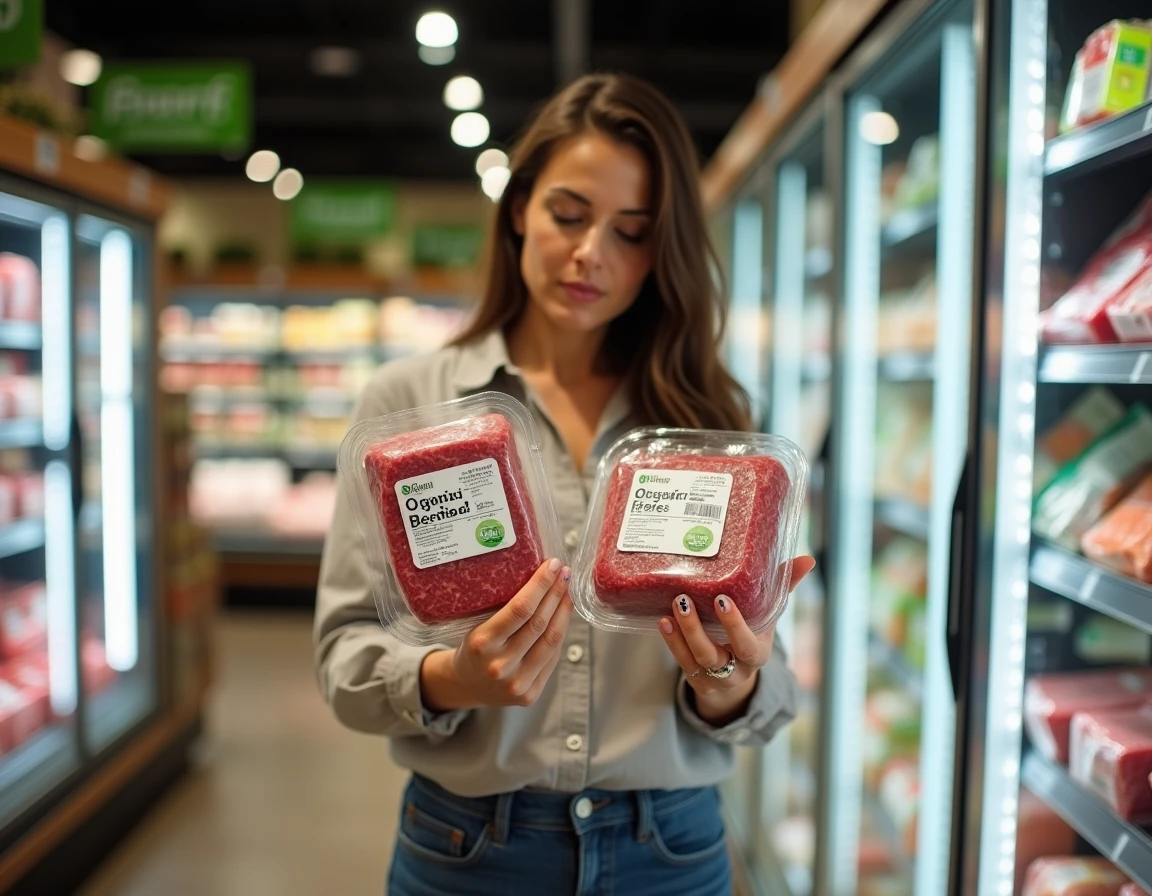
The grade (Prime, Choice, Select) appears on a blue shield from the USDA. The organic certification appears separately, in the form of the green “USDA Organic” logo or the words “organic beef” in full. Only the explicit presence of the word “Organic” legally distinguishes organic from conventional.
Other mentions may appear on the label without having the same legal value:
- “Grass-fed” does not imply organic certification. The animal may have grazed without its feed being free of pesticides.
- “No hormones administered” indicates the absence of growth hormones, but does not cover antibiotics or the feeding method.
- “Natural” is a very loosely regulated term in the United States and does not guarantee any particular farming practice.
The Visual Trap in the Aisle
An organic Choice beef and a conventional Choice beef often look the same: deep red color, moderate marbling, white to cream fat. The visual appearance of the meat reflects the quality grade, not the production method. Looking for the green logo remains the only reliable reflex.
The American system strictly separates sensory quality from health and environmental quality. A consumer who buys USDA Choice beef thinking they are getting a comprehensive guarantee is misreading the framework. The grade opens the door to tenderness, while the Organic label opens the door to farming practices. Both pieces of information are found on the same label, but they answer different questions.