
When cooking alone in the evening and appetite decreases, dinner often turns into a meal that is too light. This type of meal rarely exceeds 10 g of protein, which is an insufficient intake to maintain muscle mass after 60 years. Building a suitable protein-rich menu does not require a complete overhaul of habits, but rather a rethinking of the distribution of intake across each meal.
Protein per meal after 60: why distribution matters as much as the total
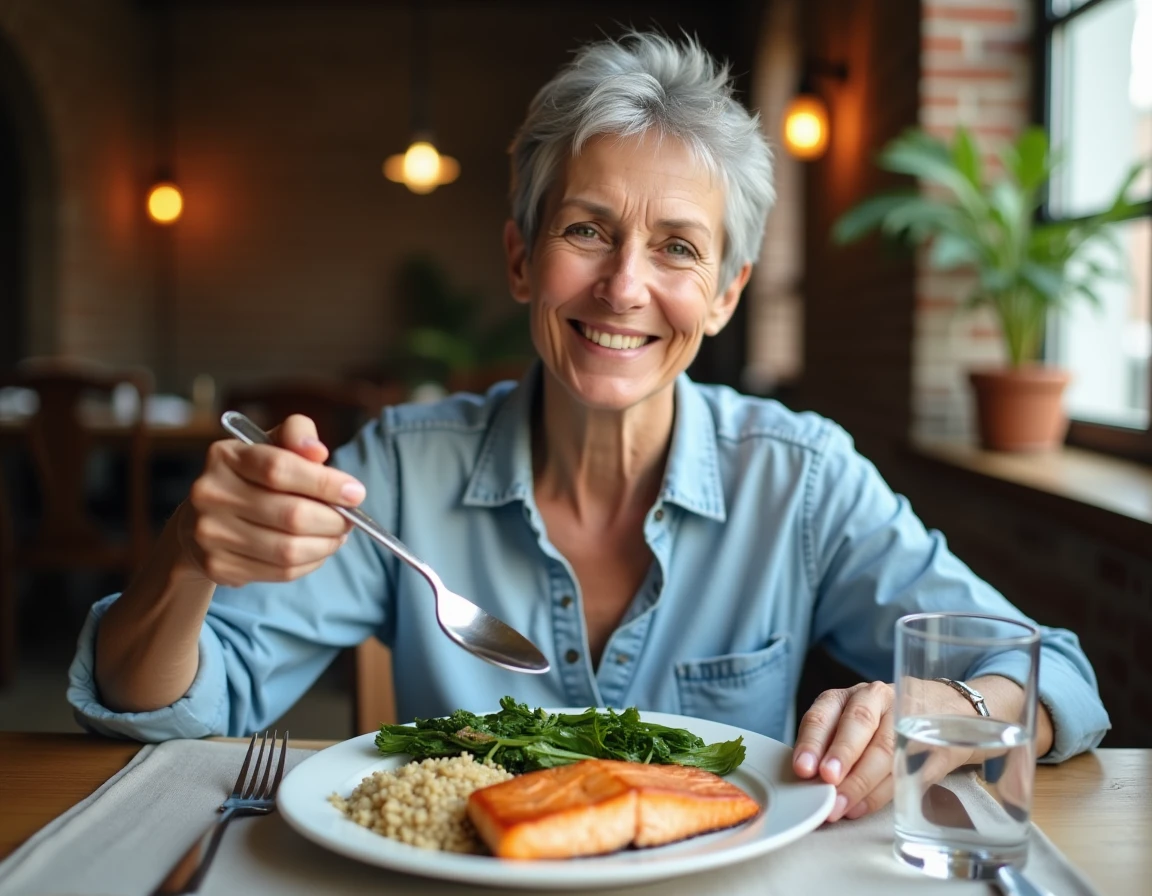
It is possible to consume enough protein throughout the day and still lose muscle. Concentrating most of the intake at lunch, while leaving the morning and evening nearly empty, does not optimally stimulate muscle synthesis.
For women over 60, reaching 25 to 30 g of protein per meal activates the anabolic response much more effectively than a single massive intake during the day. This is the threshold recognized in nutritional geriatrics for restarting muscle tissue production at each meal.
A coffee with toast and jam in the morning, a light soup in the evening: two missed opportunities. To design a protein-rich menu for a 60-year-old woman, we start by ensuring that each of the three meals exceeds this threshold. The simplest method is to combine two complementary sources: a dairy product with an egg in the morning, fish with lentils at noon.
Protein-rich breakfast: three concrete combinations that exceed 25 g

The morning remains the most often deficient meal. Three simple combinations allow reaching the threshold without powders or supplements.
- Two scrambled eggs with a slice of whole grain bread and a glass of whole milk. The eggs provide high biological value protein, while the milk adds calcium.
- A bowl of cottage cheese (curds or 3% fat) with a handful of nuts and some pieces of fresh fruit. The cottage cheese concentrates dairy proteins without excessive volume.
- A slice of cereal bread with smoked salmon and a plain yogurt. The salmon provides omega-3s in addition to protein, a double benefit after 60.
We do not eat more, we eat differently. Replacing jam with a protein source is enough to transform breakfast without changing the meal’s volume.
Lunch and dinner: alternating animal proteins and legumes
The PNNS 4 recommends increasing the role of legumes in the diet, even after 60. Lentils, chickpeas, and dried beans provide plant proteins, fibers, and contribute to acid-base balance, a parameter that affects bone health.
Lunch: focus on protein density
A grilled chicken fillet or a portion of white fish (cod, haddock) accompanied by cooked green vegetables and brown rice easily covers the 25 g. Without meat, a chickpea curry with quinoa reaches a comparable level if the portion of legumes is generous.
The classic trap remains the too-light mixed salad: a few leaves, tomatoes, a drizzle of olive oil. Without hard-boiled eggs, tuna, or cheese, it does not exceed 8 to 10 g of protein. Adding feta cubes, roasted chickpeas, and a soft-boiled egg completely changes the game.
Dinner: protect the evening meal
A vegetable soup alone is not enough. By incorporating red lentils, which dissolve during cooking and thicken the broth, plus a piece of hard cheese, you get a dinner that reaches the protein threshold without weighing down the plate.
Another quick option: a mushroom omelet with a salad, followed by yogurt. A protein-rich dinner limits nighttime muscle loss, the period when catabolism is most active.
Muscle strengthening and protein: the coupling not to be neglected after 60
Diet alone does not halt sarcopenia. To preserve strength and autonomy, coupling protein intake with resistance exercises remains the strategy validated by the literature in nutritional geriatrics.
No need for a gym. Working with resistance bands, climbing stairs, and bodyweight exercises two to three times a week activate muscle protein synthesis. Without this mechanical stimulation, the consumed proteins are less effectively used by the muscles.
Placing the protein-rich meal within two hours after the workout optimizes the use of amino acids. The exact duration of this window is still under discussion, but the principle of proximity between effort and intake remains consistent with available data.
Decreased appetite after 60: fractionate and enrich dishes
Hunger decreases, portions shrink. Forcing volume does not work. Two concrete levers allow maintaining intake.
The first: enrich dishes without increasing their volume. Powdered milk in mashed potatoes, grated parmesan on soup, a beaten egg slipped into a sauce. The protein density increases, while the visible quantity on the plate remains unchanged.
The second is the snack. A piece of Comté cheese with a few almonds in the mid-afternoon, or a glass of milk with a dry biscuit, adds 8 to 10 g of protein throughout the day. For women who eat little at dinner, this snack makes the difference between sufficient intake and chronic deficiency.
Modifying just one meal per week by testing a new protein combination is enough to initiate change. Breakfast remains the easiest meal to transform, as it generally starts from the lowest protein level.