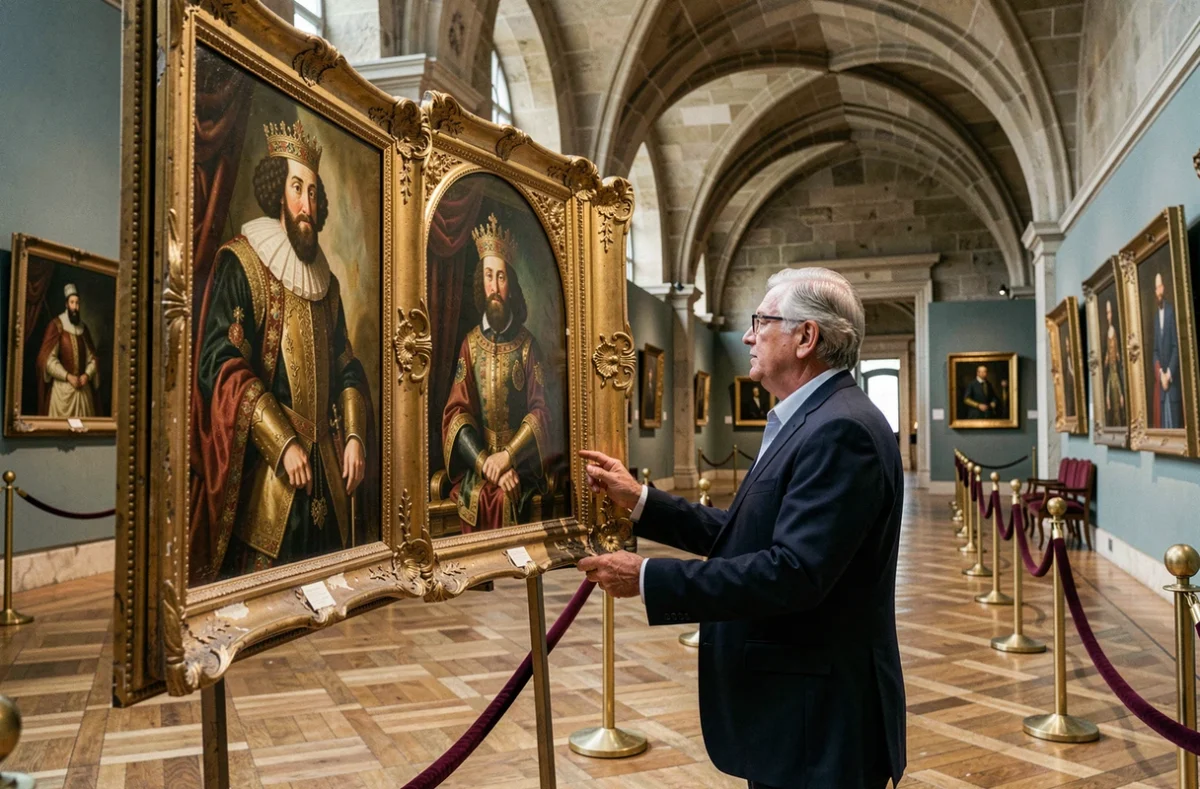
The French monarchy spanned more than thirteen centuries, from the Merovingians to the fall of Louis-Philippe in 1848. Measuring its duration means comparing dynasties with very different reign lengths, succession practices and territories. Three major lineages—the Merovingians, Carolingians and Capetians and their branches—succeeded one another, each leaving a distinct mark on the formation of the Kingdom of France.
Reign length and succession: a comparison of royal dynasties
| Dynasty | Approximate period | Number of kings | Predominant form of succession |
|---|---|---|---|
| Merovingians | 481-751 | About thirty | Division among heirs |
| Carolingians | 751-987 | About ten | Designation and coronation |
| Direct Capetians | 987-1328 | Fifteen | Male primogeniture, heir crowned during the king’s lifetime |
| Valois | 1328-1589 | Thirteen | Strict Salic law |
| Bourbons | 1589-1792 then 1814-1830 | Seven (excluding the Restoration) | Primogeniture, dynastic legitimacy |
The table highlights a major difference: the direct Capetians ensured dynastic continuity for more than three centuries by consistently crowning the heir during the king’s lifetime. This practice put an end to the succession wars that had weakened the Merovingians and undermined the last Carolingians.
The rulers who benefited most enduringly from this were those who consolidated the royal domain. Philip II Augustus greatly expanded the Capetian domain, while Louis IX (Saint Louis) grounded royal legitimacy in religious and judicial authority recognized far beyond the kingdom’s borders.
A useful resource for exploring the complete list of these rulers: the kings of France on Mega REF, which lists each reign by dynasty and date.
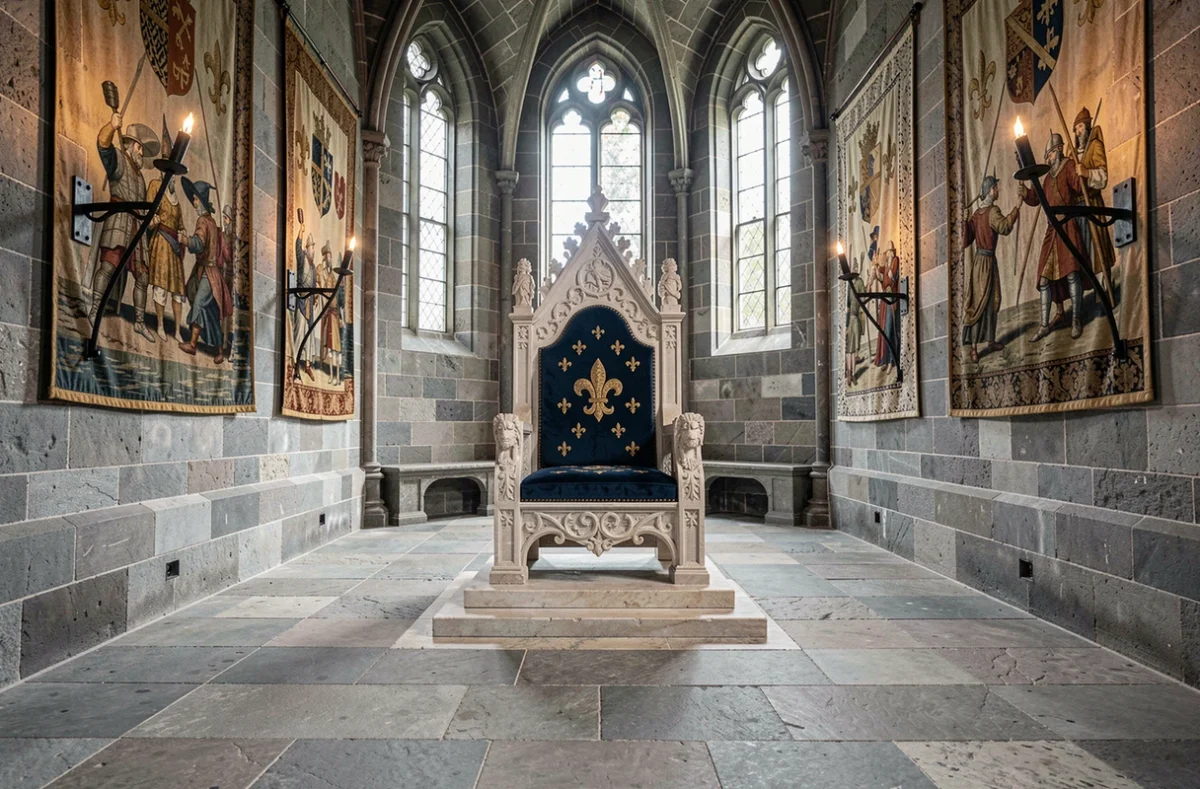
Louis XIV and the Bourbons: the concentration of royal power
Louis XIV’s reign remains the longest in the history of the French monarchy. It illustrates a trend begun by his Bourbon predecessors: the centralization of authority at the expense of local powers. Henry IV had pacified a kingdom torn apart by the Wars of Religion. Louis XIII, supported by Richelieu, had curtailed the autonomy of the great feudal lords.
Louis XIV took this policy to its conclusion by establishing the court at Versailles. The palace became a political instrument as much as an architectural one: living there meant the nobility had to depend on the king for offices and pensions.
A model exported across Europe
Several European courts imitated the Versailles model, from Prussia to Russia. This spread made the Bourbons a model of monarchy across the continent. The downside of this concentration became apparent under Louis XV and Louis XVI: deprived of effective checks and balances, the centralized state struggled to reform in the face of financial crises.
Versailles after the kings: the July Monarchy and the national narrative
The history of the kings of France did not end with the Revolution. The way subsequent regimes reinterpreted this history shaped collective memory as much as the reigns themselves.
In 1837, Louis-Philippe inaugurated Versailles as a museum dedicated “to all the glories of France”. This act transformed a royal palace into a site of national memory. A king from a junior branch of the Bourbons chose to legitimize his own power by incorporating all previous rulers into a shared narrative, from the Merovingians to the Bourbons.
A palace turned into a tool of remembrance
Versailles’s collections span five centuries of French history. They are not limited to dynastic portraits: battles, treaties and military figures are also represented. This curatorial approach had a lasting effect on how the French kings were perceived.
- Medieval rulers (Clovis, Saint Louis, Philip Augustus) are presented as founders of a nation, even though they ruled over a patchwork of fiefs
- The Bourbons appear as builders of a modern state, glossing over internal crises (the Fronde, the revocation of the Edict of Nantes)
- The Valois, often associated with the Wars of Religion, are placed within a glorious continuum rather than defined by their diplomatic failures
This reinterpretation had a lasting influence on the teaching of history in France. The national narrative of the kings was constructed after the monarchy, by regimes that needed this continuity to establish their own legitimacy.

Capetians versus Valois: two approaches to territory
The direct Capetians expanded the royal domain through methodical annexation: marriages, inheritances and targeted conquests. Philip Augustus recovered Normandy, Anjou and Maine from the Plantagenets. Each Capetian acquisition strengthened the domain without spreading military resources too thin.
The Valois inherited a larger kingdom but had to manage prolonged external conflicts. The Hundred Years’ War consumed considerable resources without producing net territorial gains for several decades. Charles VII recovered the entire kingdom only after the conflict ended, thanks to sweeping fiscal and military reforms.
This difference in approach explains why the direct Capetians are often seen as “builders” and the Valois as “survivors.” Both labels are reductive, but they reflect a real difference in their relationship to territory and war.
The history of the kings of France cannot be reduced to a list of names and dates. Succession mechanisms, management of the royal domain and the post-monarchical construction of memory offer three complementary ways of understanding it. Louis-Philippe’s transformation of Versailles into a national museum remains one of the most revealing political acts: it shows that the memory of the kings was shaped as much by those who succeeded them as by the rulers themselves.